a program of the EUREKA SPRINGS HISTORICAL MUSEUM
About Louis and Elsie Freund
Forty years before the term "power couple" became commonplace, Louis and Elsie Freund proved that a team of two highly motivated and creative individuals could shape the very future of American art and culture.
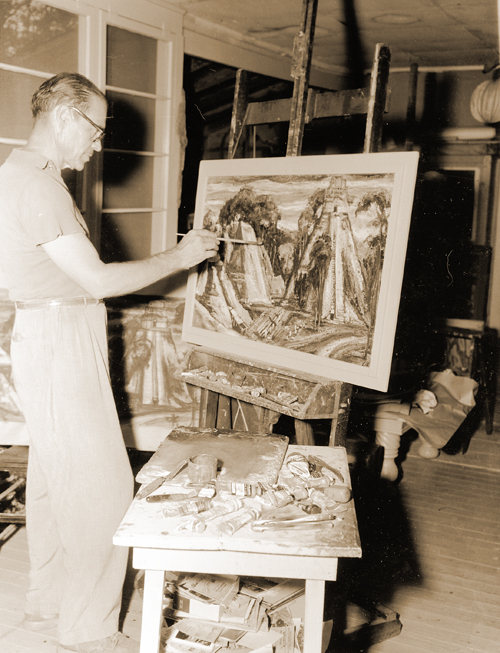 Harry Louis Freund was born in Clinton, Missouri in 1905. He attended the University of Missouri at Columbia and Washington University in St. Louis before receiving a travel scholarship in 1929. After studying abroad in Paris and a brief stint working as an artist in New York City, Louis Freund returned to his homeland to paint murals for the federal government. Capturing a rural lifestyle that was fast disappearing, Louis spent months driving his Model T through the backroad communities of Missouri, Arkansas, Kansas, Oklahoma, and Texas for authentic mural scenes that he could paint and send back to the Treasury Department in Washington. Many were installed in midwestern post offices and bank buildings. After the United States entered World War II, he started painting murals for the war department as a conscientious objector. He later shifted his focus to portraits and more traditional motifs.
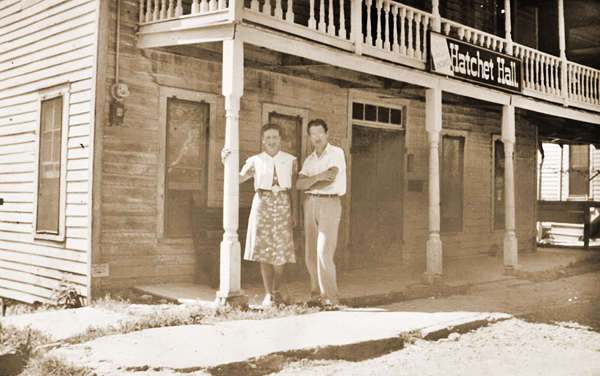
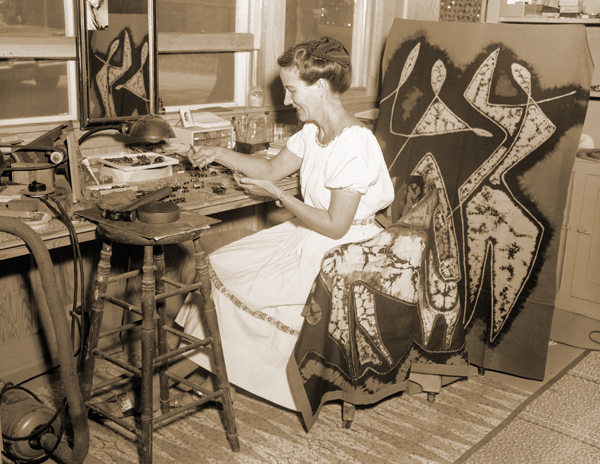 Born in 1912, Elsie Bates had grown up on a game preserve and attended the Kansas City Art Institute for a year before relocating to Branson, Missouri, where she sold her first handcrafted jewelry made from walnut shells. Sharing a love for art, natural beauty, and handicrafts, Louis and Elsie met in 1936 and dated for three years before purchasing "Hatchet Hall" in Eureka Springs and marrying in 1939. The old boarding house that had once belonged to the infamous hatchet-wielding temperance leader Carry Nation was in danger of demolition. The Freunds would not only save the old home, but repurpose it as the Art School of the Ozarks - the very first of its kind in Eureka Springs.
When not teaching or painting stunningly vibrant watercolors, Elsie developed new and exciting techniques and materials for her jewelry that gained her national attention and her own product line of "Elsaramics". With a robust summer curriculum that covered fine arts such as drawing and painting, as well as native handicrafts such as weaving on traditional looms, the Freunds' unique art school quickly kickstarted a thriving artist colony in the town.
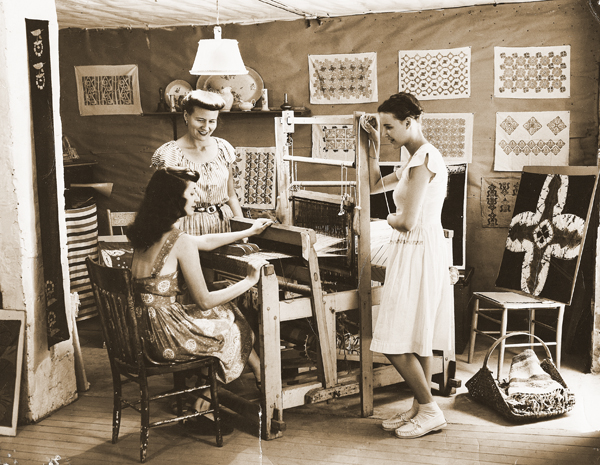
Louis and Elsie were also instrumental in establishing the Eureka Springs Guild of Artists and Craftspeople, Eureka Springs Historical Museum, Eureka Springs Art Gallery, and Centennial Committee. Outside of Eureka Springs, Louis helped to establish art departments at Hendrix College, Little Rock Junior College (now University of Arkansas at Little Rock), the historically African-American Bishop College in Texas, and Florida's Stetson University. Louis and Elsie also organized the Florida Craftsmen (now Florida CraftArt) in 1951. Everywhere they went, Louis and Elsie inspired a tightly woven community for artists and art lovers.
Legacy of the Freunds
Today, the shared and individual legacies of Louis and Elsie Freund are far-reaching and internationally acknowledged. Louis' dramatic paintings and large scale murals grace the walls of public spaces and many of the nation's most well-respected museums, and Elsie's superb watercolors and pioneering works in handcrafted silver jewelry, when not showcased in international museums, continue to fetch hefty prices from art dealers and wealthy collectors. The decades of community-building activities the Freunds bestowed upon cities in Arkansas, Missouri, and Florida can still be seen and felt today - in the surviving visual masterpieces they left for us, and in the resilient spirit of today's artists and craftspeople who continue to walk in their thoughtfully curated footsteps.
The Freund Vision Plan