
a program of the EUREKA SPRINGS HISTORICAL MUSEUM
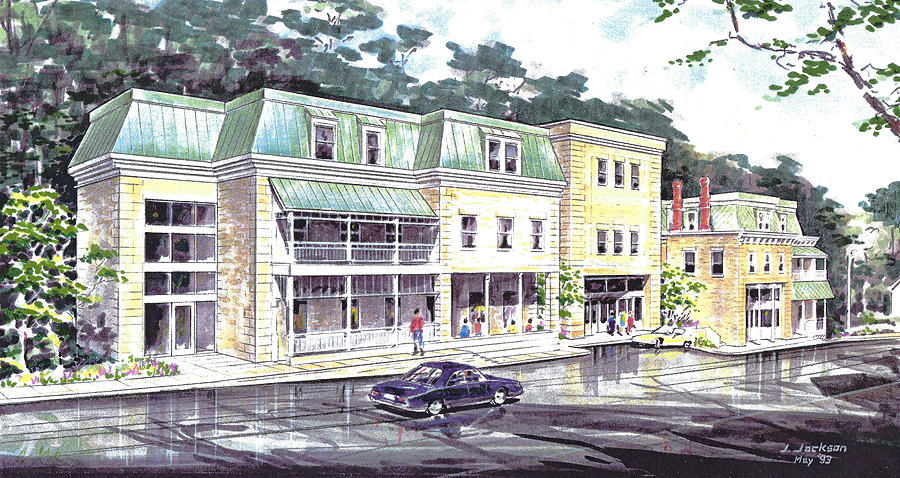
For more than fifty years, Louis and Elsie Freund worked tirelessly to grow both the artist community and arts economy of Eureka Springs. Perhaps even more incredible than the dreams they pursued were the realized accomplishments that they were an integral part of - the first art school, an artists guild, art gallery, the downtown centennial mural, a historical museum, and a scholarship for young artists. But there was one vision that was never realized, and it was perhaps their grandest of all.
The Freund Vision Plan
With the formation of the Eureka Springs Historical Museum in 1971, Louis and Elsie soon realized that the limited space of the 1889 Calif House would make it difficult to adequately showcase both the art and history of Eureka Springs - two crucial facets of the town's early development that they believed were inseparable.
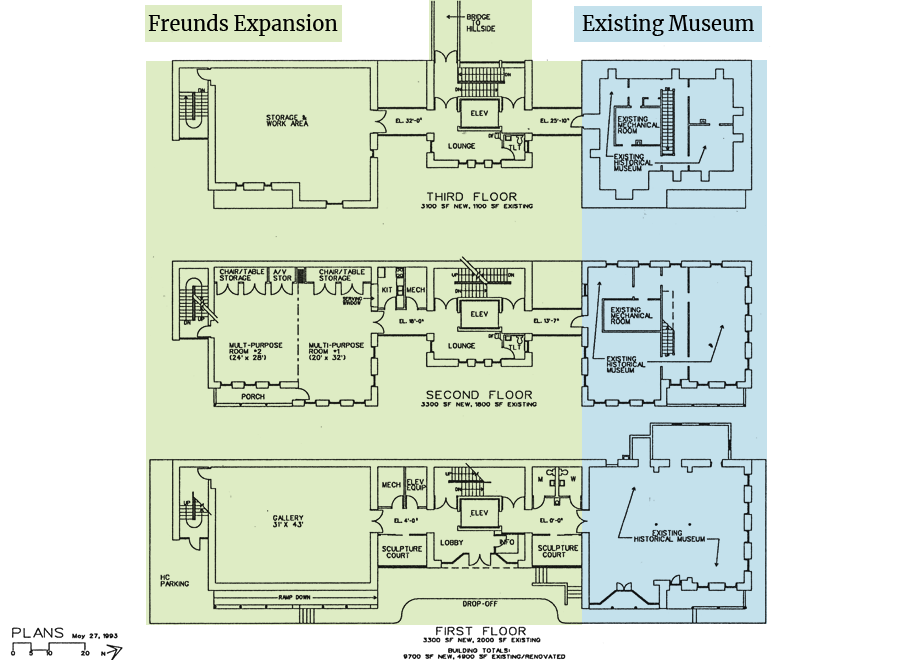
The Freunds began to develop a highly ambitious plan that would expand the Eureka Springs Historical Museum to include a full art gallery, a new entrance tower with lobby, sculpture courts, and an elevator for ADA accessibility, plus additional second and third floor multi-use exhibit and archival storage space. Best of all, the proposed building expansion would fit neatly within the adjacent museum-owned lots. With the museum serving as the first impression at the south entrance to downtown, this grand expansion would radically position Eureka Springs as an important Ozark arts and history cultural destination.

In 1993, Louis and Elsie and a newly organized Friends of the Museum group hired the firm of Cromwell Architects Engineers to put their vision on paper. The architects were no strangers to Eureka Springs, having previously helped place the city on the National Register of Historic Places. As lead architect Charley Penix described the Freunds Vision Plan project:
"The dream is to provide a unique public place for both the presentation and archiving of the visual arts in Eureka Springs; a place for making connections between art and history, art and the present, art and the community which nurtures its being."
Project Challenges » Parking
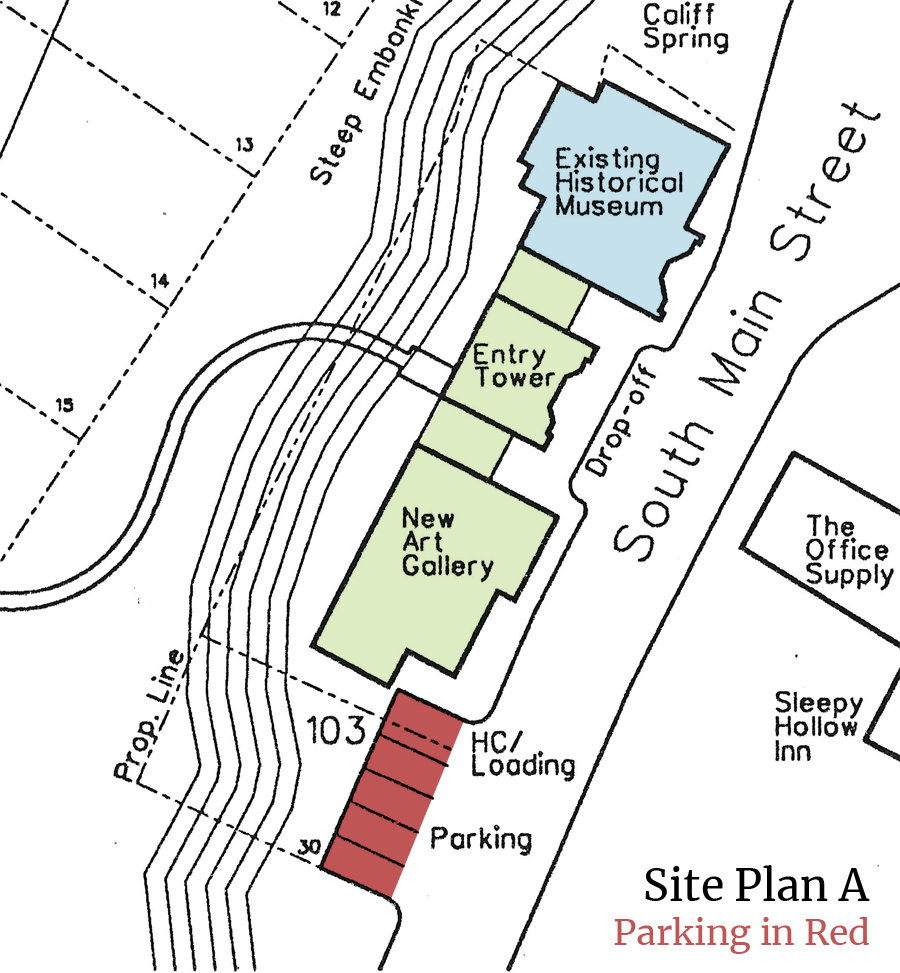
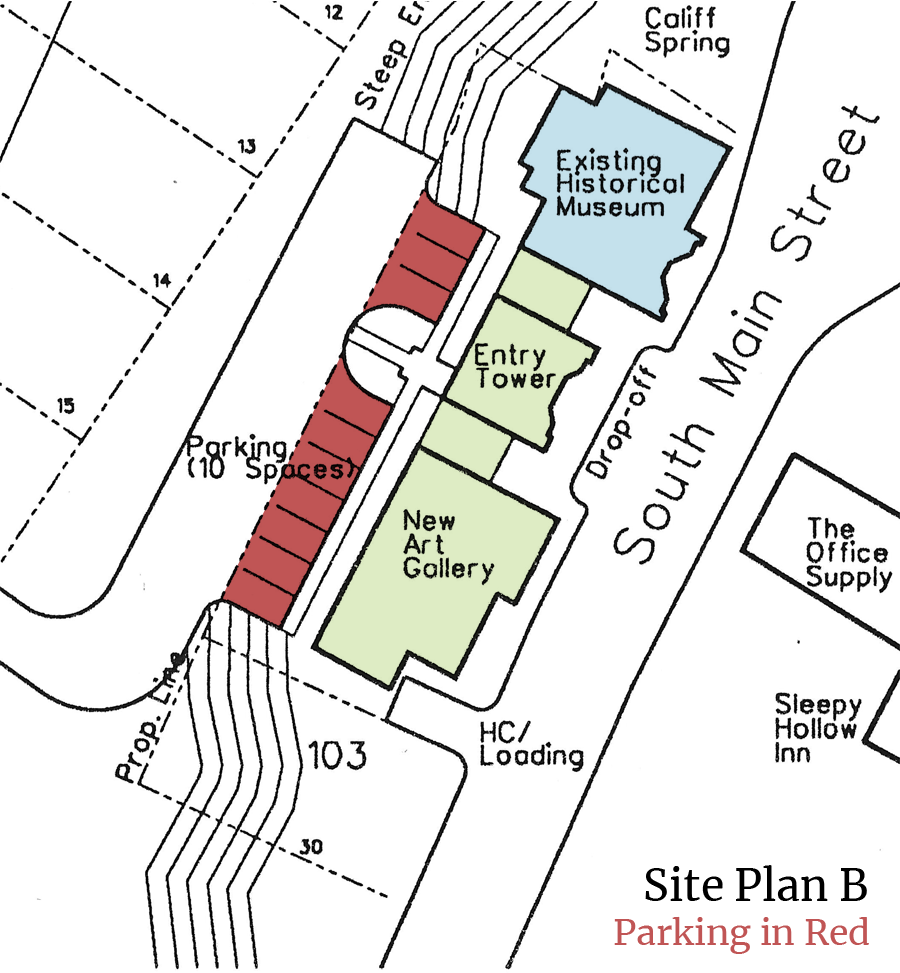
The city of Eureka Springs was initially developed before the age of the automobile, and its narrow winding streets still reflect that paradigm today. Flat land for parking is at a premium. The 1993 Freunds Vision Plan offered three different solutions for addressing museum parking needs. One was to simply move the existing 5-space museum parking lot to the south end of the new addition. The second option featured a new 10-space parking lot high on the bluff behind the museum with a pedestrian bridge and Clay Street access. The third and most intensive proposal showed a new 47-space parking lot on the bluff with vehicle access 200 feet south of the new expansion.
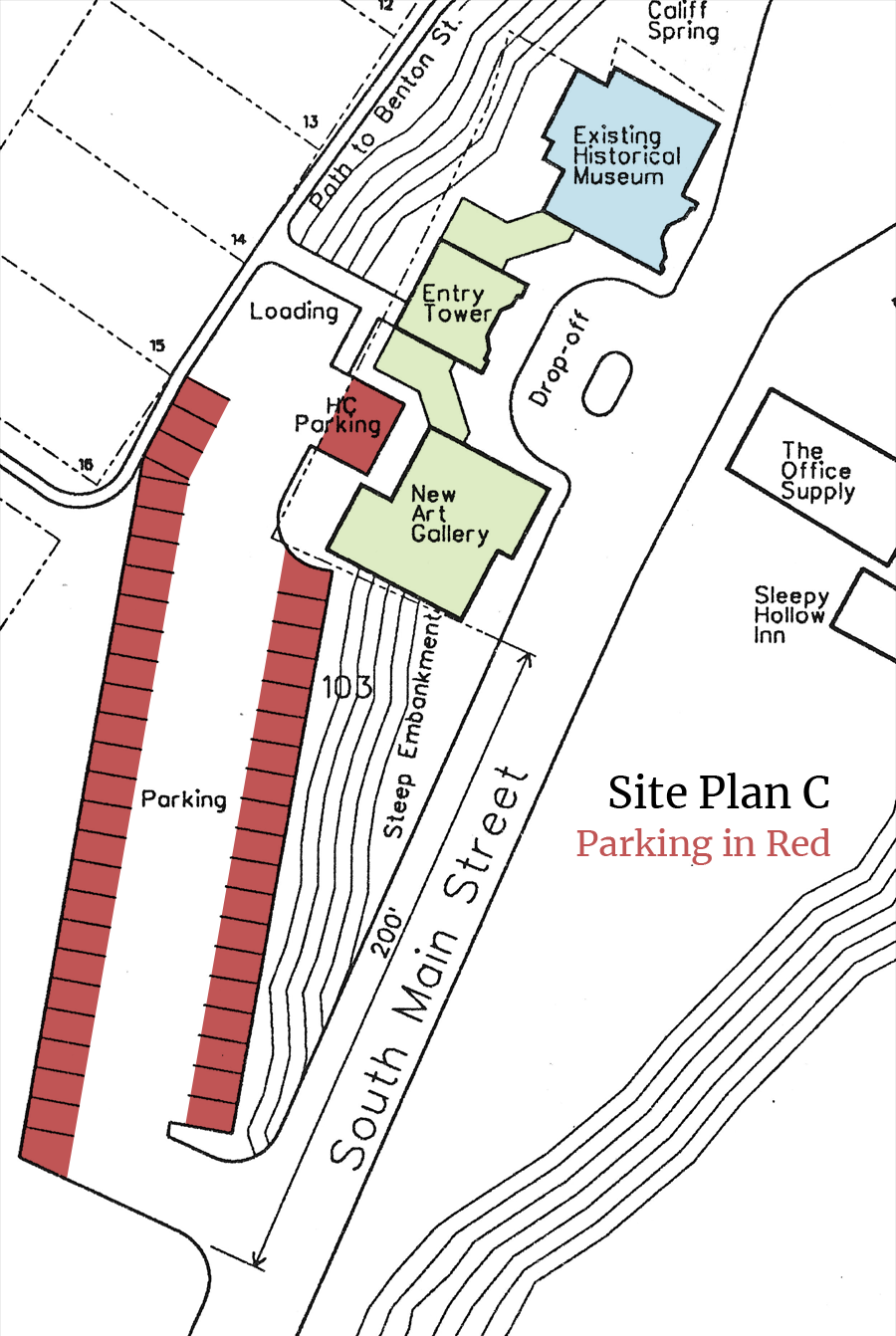
While finding parking downtown can still be a challenge during busy weekends, the city has made much progress since 1993. Public parking lots line Main Street, including lots directly across the street from the museum. Public transit "trolleys" run regular routes along Main Street to/from the Downtown Trolley Depot and a dedicated trolley stop (#65) for the Historical Museum was recently added.
In addition, the south entrance to town was enhanced with the Planer Hill Park and Ride transportation center in the year 2010. Located south of the proposed Freund expansion site, this municipal transportation center features public restrooms, trolley pickup/dropoff, and parking for 65 vehicles and 2 tour buses. From this convenient parking area, a stamped concrete sidewalk with safety railing was installed, leading directly to the Eureka Springs Historical Museum.
Project Challenges » Funding
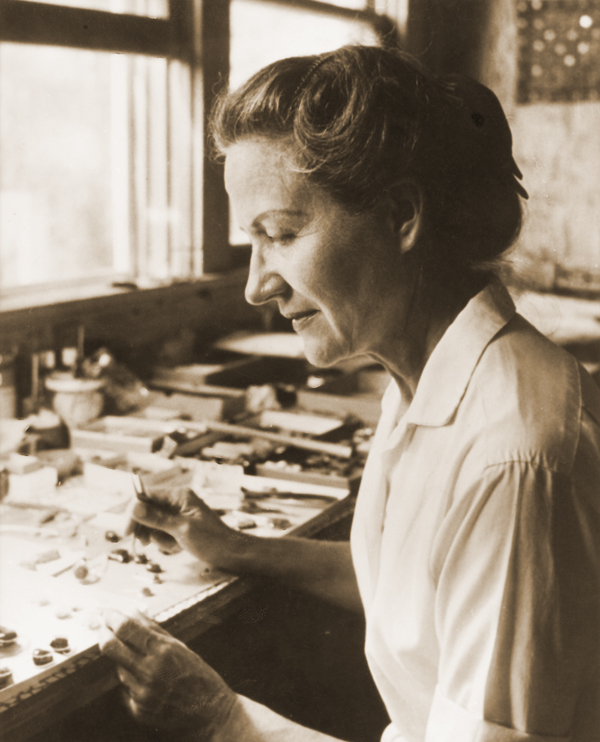 "So now is the time the city fathers should step forward and take the bull by the horns (so to speak) and raise the money..."
~ Elsie Freund, letter to the architect (June 1, 1993)
As with any large project of such noble ambitions, funding was a major challenge that stood in the way of making the Freund Vision Plan become a reality. When the plans were initially developed in 1993, costs were estimated at $2.2 million. When revisiting the plan in 2021, lead architect Charley Penix suggested an adjusted estimate of about $10 million. He noted, however, that the Freund Vision Plan was designed in such a way that would allow the project to be funded and built in phases, if necessary.
The first phase would include the new entrance tower with an elevator, sculpture courts, and restrooms, and would create ADA accessible access to the three exising museum floors. The second phase would construct the new street-level art gallery space, plus second floor multi-use exhibit and programming space, with third floor archival storage above.
We welcome supporters of Louis and Elsie's Vision Plan to connect with the Eureka Springs Historical Museum to discuss how we can work together to make their dream a reality.